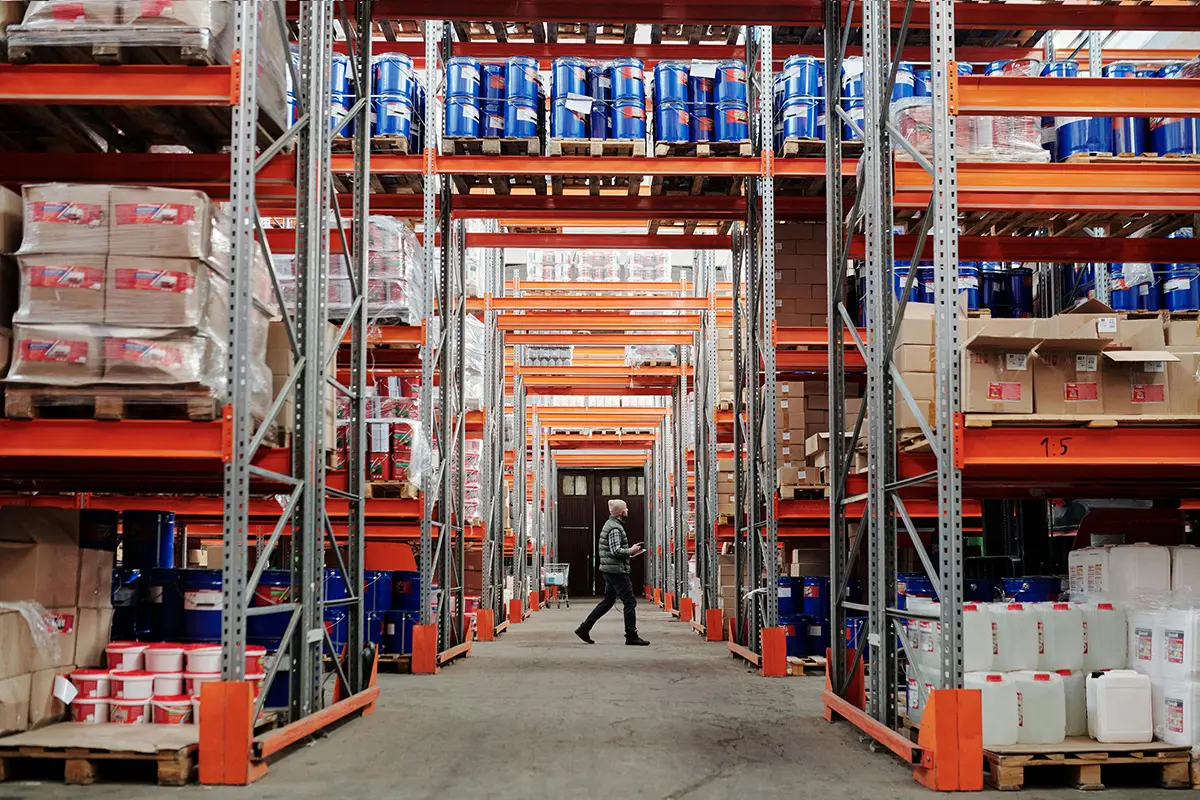
A warehouse is not simply a storage space: it is a strategic node within the company’s supply chain, where operational efficiency, service quality, and market responsiveness are determined. However, in many organizations, the warehouse is also one of the most neglected areas, often affected by invisible yet costly inefficiencies. A structured and well-planned reorganization can make the difference between a company that constantly reacts to problems and one that anticipates challenges.
Why warehouse reorganization is crucial for competitiveness
Reorganizing the warehouse is not just an operational necessity, it is a strategic lever that enables companies to:
- Reduce logistics and operating costs
- Speed up order fulfillment times
- Increase picking and shipping accuracy
- Improve inventory turnover
- Deliver a more reliable and timely customer service
In an increasingly fast-paced and customized market, an agile and optimized warehouse allows companies to adapt quickly to change, reduce errors, and seize new business opportunities.
Key signs that indicate the need to reorganize the warehouse
Several symptoms may indicate that the warehouse has become a bottleneck rather than a growth enabler. The most common warning signs include:
1. Increase in picking errors and shipping mistakes
When order preparation errors increase, wrong items, incorrect quantities, missing documentation, customer experience is compromised and costs rise due to returns, complaints, and rework.
2. Congested spaces and difficulty locating products
If operators spend excessive time locating items or if space is used inefficiently, the warehouse layout is likely no longer suitable for the volume and variety of managed products.
3. Long throughput times and bottlenecks
Excessive operational cycle times, from inbound to outbound, are often caused by disorganized flows, overly long routes, poorly defined areas, or non-standardized manual processes.
4. Obsolete or excess inventory
The accumulation of slow-moving or unsold products signals ineffective inventory management and poor integration between demand and supply. Capital tied up in inventory reduces liquidity and increases holding costs.
5. Business growth not properly supported
A rapid increase in orders, product lines, or customers can strain a logistics structure designed for lower volumes. In such cases, the inability to scale operations can result in lost competitiveness.
When to act: timing and planning
Waiting too long to intervene can trigger a spiral of inefficiencies, customer loss, and reputational damage. A proactive approach is recommended, especially during key moments such as:
- Launching new sales channels (e.g., e-commerce)
- Mergers or acquisitions involving new product lines
- Increased product variety or inventory turnover
- Business process reorganization or the implementation of a new ERP/WMS
A lean approach to warehouse reorganization
Lean Management applied to logistics is one of the most effective approaches to transforming the warehouse into a center of efficiency. The core principle is eliminating all forms of waste (muda) and focusing on activities that create value for the customer.
Main types of waste to eliminate
- Unnecessary movements
- Excess inventory
- Waiting times between activities
- Errors and rework
- Overly long or intersecting routes
Adopting a Lean approach means standardizing processes, increasing operational visibility (including through visual management), and using tools that support continuous improvement (Kaizen).
Lean methodologies and tools for warehouse optimization
1. The 5S Method
A five-step system designed to create an organized, safe, and efficient work environment:
- Sort: remove what is not needed
- Set in Order: organize each workstation logically
- Shine: maintain cleanliness and order
- Standardize: define shared procedures
- Sustain: maintain and continuously improve over time
2. Value Stream Mapping (VSM)
This involves mapping the entire value stream, both value-added and non-value-added activities, that a product passes through in the warehouse. VSM helps identify bottlenecks, delays, waiting times, and waste, enabling more efficient redesign.
3. Kanban
A visual system for managing materials and inventory. By using physical or digital signals, Kanban supports lean replenishment, preventing both shortages and excess inventory.
4. Just-in-Time (JIT)
This approach focuses on replenishing only what is needed, when it is needed, reducing excess stock and increasing inventory turnover. It requires a synchronized and responsive supply chain.
Technologies supporting warehouse reorganization
Technological innovation provides increasingly powerful tools to transform warehouse operations:
- Warehouse Management Systems (WMS): software to automate location management, flows, and priorities
- Barcodes and RFID: fast and accurate product identification
- Pick-to-Light / Voice Picking: digital tools that speed up and improve picking accuracy
- Digital layout simulations: to test new flows before physical implementation
Warehouse reorganization: a phase-by-phase approach
An effective warehouse reorganization should follow a structured path:
- Analysis of the current state: mapping flows, KPIs, layout, and tools
- Identification of critical issues: analysis of problems, costs, and bottlenecks
- Definition of objectives: throughput time, inventory levels, space utilization, error reduction
- Design of the new layout and flows: considering ergonomics, safety, and ABC logic
- Change planning: phased activities, risk management, internal communication
- Implementation and training: staff involvement and operational testing
Continuous monitoring: KPI definition and periodic review
Who to trust: aBCD Consulting, your partner for warehouse reorganization
Warehouse reorganization requires cross-functional expertise in logistics, industrial engineering, digital technologies, and change management. aBCD Consulting specializes in guiding companies through logistics transformation projects with a practical, measurable, and sustainable approach.
With aBCD Consulting, you gain:
- A comprehensive warehouse audit, including process mapping and KPI analysis
- Application of Lean methodologies to optimize every operational area
- Layout design and implementation support
- Formazione del personale per garantire adozione ed efficacia delle nuove prassi.
- Support for integration with WMS, RFID, and digital tools
- Ongoing support for continuous improvement
Warehouse reorganization is not just a technical intervention, it is a strategic decision that directly impacts competitiveness, customer satisfaction, and operational sustainability.
Partnering with an experienced team like aBCD Consulting means transforming an area often seen as a “support function” into a powerful engine of efficiency, innovation, and growth.