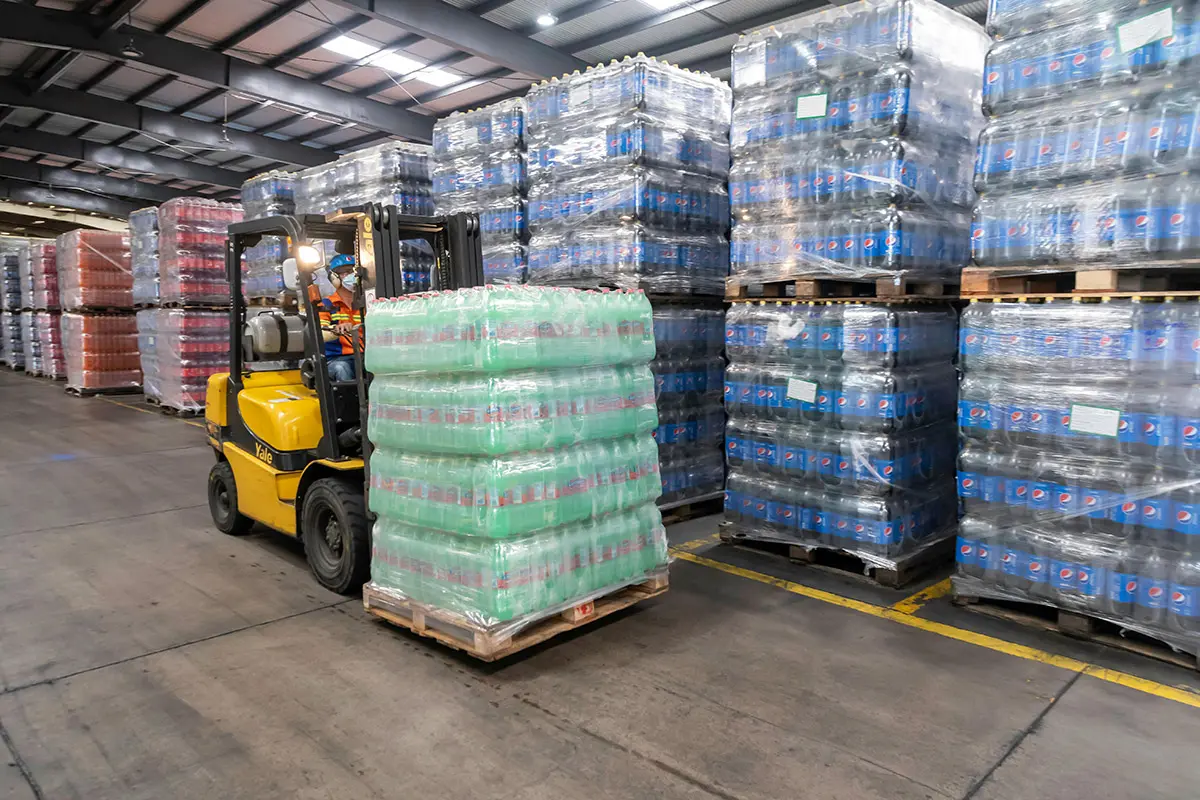
Food logistics is one of the most critical and strategic areas of supply chain management. Unlike other industries, the margin for error here is virtually zero: ensuring product quality, safety, and freshness throughout the entire supply chain is an absolute priority, not only to comply with strict regulations, but also to maintain consumer trust and protect brand reputation.
Companies operating in the agri-food sector must therefore face complex logistics challenges that require highly professional approaches, advanced technologies, and in-depth knowledge of current regulations.
What is food logistics
Food logistics encompasses all activities and processes required to manage, handle, and distribute food products while ensuring food safety, traceability, temperature control, and on-time delivery. It involves every stage of the supply chain:
- Storage in suitable environments
- Transportation using appropriate vehicles
- Timely and widespread distribution
- Quality control and food safety management
- Continuous monitoring of critical parameters
All of this must take place in a context where time is limited, error margins are extremely low, and demand is constantly evolving.
Key regulations in food logistics
The food supply chain is governed by a complex regulatory framework aimed primarily at protecting public health. Two of the most important references for food logistics are the ATP Regulation and the HACCP system.
ATP regulation for the transport of perishable goods
The ATP Agreement (Accord Transport Perissable) is an international convention that defines requirements for the road transport of perishable food products. It applies to goods such as meat, fish, dairy products, ice cream, and fruit and vegetables.
Key requirements include:
- Insulated and refrigerated vehicles, approved according to specific technical standards
- Temperature control, with mandatory maintenance of defined thresholds
- Periodic certification, requiring regular inspections to ensure compliance
Compliance with ATP is not only a legal obligation, but also a guarantee of quality and reliability throughout the supply chain.
HACCP system and food safety
HACCP (Hazard Analysis and Critical Control Points) is a food safety management system that identifies potential hazards and establishes critical control points to prevent, eliminate, or reduce them to acceptable levels.
Applied to logistics, HACCP requires:
- Risk mapping throughout transport and storage processes
- Continuous monitoring of temperature, humidity, and storage times
- Staff training on hygiene practices and emergency procedures
A well-implemented HACCP system helps prevent contamination, avoid penalties, and increase end-customer confidence.
Delivery optimization: technologies and best practices
Food logistics requires precision, speed, and flexibility. Achieving high performance depends on adopting advanced digital tools and best-in-class operational practices.
Intelligent route planning
Route optimization software enables real-time planning of the most efficient delivery routes based on:
- Delivery priorities
- Type of transported products
- Traffic conditions
- Weather forecasts
These tools help reduce delivery times, control operating costs, and limit environmental impact through optimized routes and lower fuel consumption.
Efficient management of perishable goods
Perishable food products require a continuous and closely monitored cold chain. The most innovative solutions include:
- Smart refrigerated warehouses, equipped with IoT sensors for continuous monitoring of temperature and humidity
- Inventory management systems (WMS) integrated with ERP platforms and traceability tools
- RFID labeling to track each batch in real time
These technologies help reduce waste, improve product rotation, and preserve the organoleptic properties of food.
Traceability and transparency: the value of a controlled supply chain
Modern consumers increasingly demand transparency regarding product origin, quality, and the processes involved before products reach store shelves
Implementing advanced traceability systems makes it possible to:
- Reconstruct the journey of each individual logistics unit
- Improve recall management in case of non-compliance
- Provide additional guarantees to customers and distributors
Today, technologies such as blockchain enable secure, shared, and digital traceability across all supply chain stakeholders.
Sustainability in food logistics
In the food sector, sustainability is no longer optional: it is a strategic lever that generates cost savings, brand value, and differentiation.
Leading companies are investing in:
- Biodegradable and reusable packaging, reducing single-use plastics
- Low-impact fleets, including electric, LNG, or hybrid vehicles
- Recovery and donation of surplus food products
- Cold chain optimization to reduce energy consumption
These practices respond to growing consumer awareness and also strengthen a company’s competitive market positioning.
When to rely on specialized consulting
Managing a food supply chain is a highly technical and regulation-intensive activity. Many companies, especially SMEs, do not have the internal resources or expertise to address all challenges effectively.
Engaging a specialized consulting firm can be a strategic decision to:
- Analyze the supply chain and identify inefficiencies and critical issues.
- Optimize costs while maintaining high service quality.
- Implement advanced technologies and sustainability initiatives.
- Train staff and define standardized operating procedures.
Rely on the experts at aBCD Consulting
aBCD Consulting provides comprehensive support for food logistics management, offering tailored solutions based on real-world experience, advanced technologies, and a results-oriented approach.
By choosing aBCD Consulting, you can:
- Simplify and accelerate deliveries through intelligent route planning
- Integrate digital technologies for inventory management and traceability
- Adopt sustainable strategies that enhance brand image and reduce costs
Food logistics is a complex challenge, but also a major opportunity. Companies that invest in expertise, technology, and sustainability can transform their supply chain into a lasting competitive advantage.
Contact aBCD Consulting to ensure efficient, high-quality, and safe food logistics across every stage of your supply chain.